You Stopped Drinking. Now What?
The Nervous System Reset No One Talks About
You stopped drinking. That’s a powerful decision.
But here’s what most people don’t expect…
You don’t immediately feel calm.
You don’t automatically feel clear.
You don’t suddenly feel stable.
In fact, many people experience something surprising:
Anxiety.
Restlessness.
Sleep disruption.
Mood swings.
Mental fog.
Why?
Because your nervous system has been operating in a particular rhythm — and now it must recalibrate.
Quick Win 1:
If you stopped drinking and feel anxious or unsettled, try this today:
Take a 10-minute walk at the same time you used to drink. You’re not replacing alcohol. You’re retraining your nervous system.
The Nervous System Reset No One Talks About
Alcohol suppresses the nervous system. Over time, your brain adapts by increasing excitatory chemicals to maintain balance. When you remove alcohol, those stress signals can temporarily feel amplified.
That doesn’t mean something is wrong. It means your body is recalibrating. This phase is not weakness. It’s adjustment. And this is where many people struggle — because no one prepared them for the reset phase.
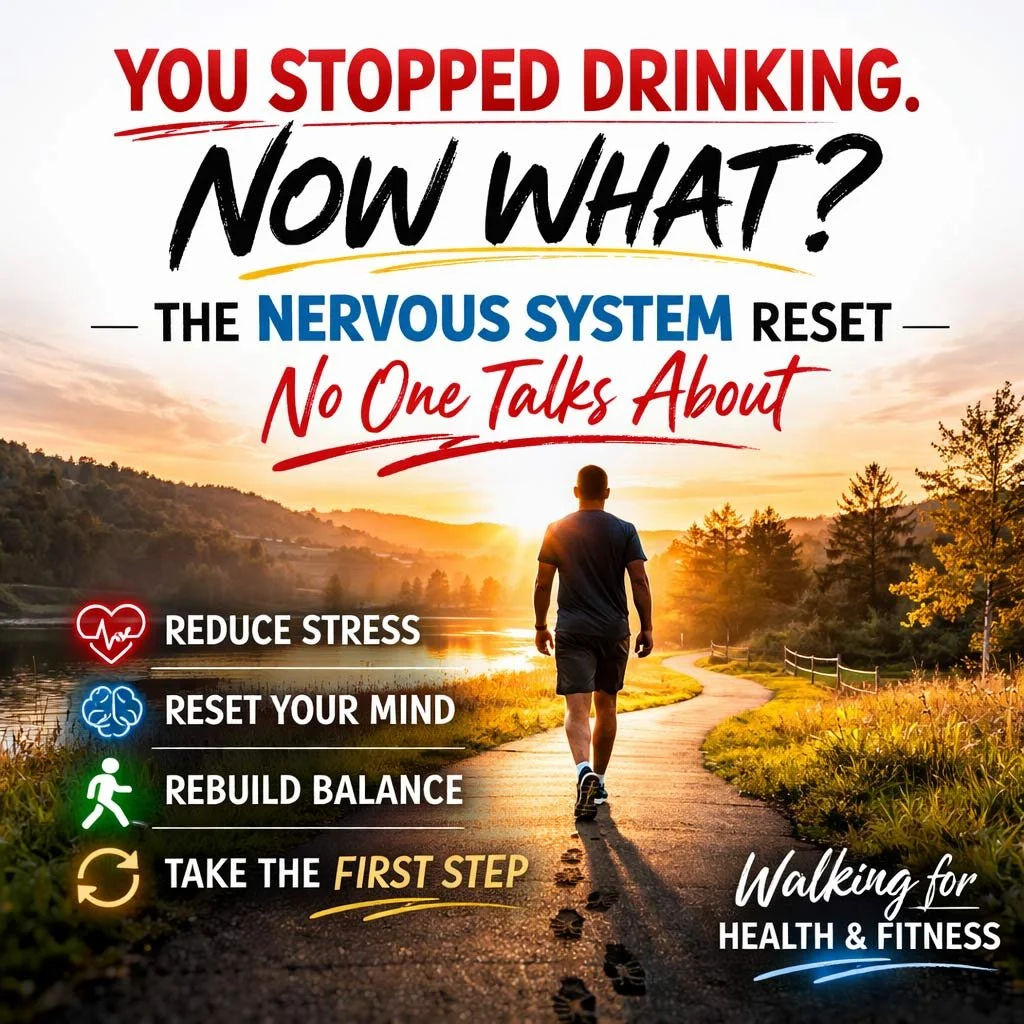
What’s Actually Happening in Your Brain
When alcohol is removed, your body works to rebalance key neurotransmitters:
GABA (calming signal)
Dopamine (reward and motivation)
Serotonin (mood stability)
Cortisol (stress hormone)
Until balance is restored, you may feel unsettled.
That’s normal.
The question becomes: How do you stabilize the system naturally?

Quick Win 2:
Before you try to “optimize your life,” restore your rhythm.
Go outside.
Walk for 15 minutes.
Breathe slowly.
Let your body feel safe again.
Walking: The Simplest Nervous System Regulator
This is where walking becomes powerful.
Not intense exercise.
Not punishment workouts.
Not forcing productivity.
Walking. Steady, rhythmic, consistent movement sends a safety signal to the brain.
It helps:
Regulate stress hormones
Improve serotonin production
Support dopamine stability
Reduce anxiety
Improve sleep
Rebuild emotional resilience
Walking restores rhythm. And rhythm restores regulation.
When you walk consistently — even 10–20 minutes per day — you help your nervous system shift from fight-or-flight toward stability.
Quick Win 3:
Feeling “off” after quitting alcohol doesn’t mean something is wrong.
It means your nervous system is recalibrating.
Stability first. Growth second.
Why Order Matters
Many people try to “fix” themselves immediately after quitting drinking.
They overhaul their diet.
They start intense training.
They expect peak performance.
Quick Win 4: Reset Ritual:
Step outside.
Walk for 10 minutes.
Inhale for 4 steps, exhale for 3.
Tell yourself: “My body is learning a new rhythm.”
But recovery is sequential.
First: Stabilize the nervous system.
Then: Build strength.
Then: Build identity.
Walking creates the foundation.
And from stability, progress becomes sustainable.
If You’ve Stopped Drinking and Feel Off-Balance…
You’re not broken.
You’re recalibrating.
Your body is learning how to function without a suppressor.
Give it rhythm.
Give it movement.
Give it consistency.
Walking may look simple.
But it’s one of the most neurologically powerful tools available.
Quick Win 5:
You don’t need intensity right now.
You need regulation.
Start with one walk. Same time. Every day.
Ready to Build Momentum?

Download my free guide:
Think Fit, Walk Fit
A simple starting point to build rhythm, structure, and emotional stability through walking.
This free guide helps you create immediate momentum with small, intentional steps you can take today.
It’s designed to shift your mindset first—so your body can follow with consistency and confidence.
Walk on. Stay steady. Stay STRONG,
Frank
Author: Walking for Health and Fitness, Fitness Walking and Bodyweight Exercises, Walking Inspiration, Walking Logbook Journal , and Walking Works Blueprint


