When my pants started getting tighter around the waist during prostate cancer treatment, my first thought was, “Should I walk more?”
I was already walking regularly. I’d written books about walking. Of course that was the first thing I thought of. But the change around my waist raised another question. How do I manage the weight I’m gaining and hold on to the strength I already have?
Maybe you’re still playing golf, doing yard work, or getting your workouts in. You feel capable and want to stay that way. Here’s where eating habits, walking, and strength work can each fit.
Watch the video: ADT Weight Gain and Muscle Loss: Where Walking and Strength Fit (Release date: 11/24/26 at 10am)
What to do when your waist or weight starts creeping up
Androgen deprivation therapy (ADT), a form of hormone therapy for prostate cancer, can lead to fat gain around the waist and loss of muscle and strength. Both can happen at the same time. Your belt may fit differently even if your weight has barely changed. Cancer Research UK on weight and muscle changes during hormone therapy.
Bring up the changes you’re seeing at your next appointment. One question worth asking is, “Given where I am in treatment, should I aim to keep my weight steady or work toward losing some?” If you’d like help deciding what to eat, ask whether your care team can refer you to a dietitian who works with cancer patients.
Then look for one change you’d actually be willing to keep doing. Maybe you swap your usual lunchtime soda for water most days. Maybe you plan two dinners you already enjoy that include a protein food and vegetables, so you have something in mind when you’re tired. Ask your team how to meet your nutrition needs before making big cuts to what you eat.
Where walking fits
Walking is my foundation because I can adjust it to the day I’m having. If your usual route feels good and you recover well, keep it. When treatment takes more out of you, a shorter route on level ground might fit better. Give it a place in your day you can come back to, like after lunch.
Write down what you did and how you felt later that day and the next morning. “Walked my usual loop. Felt fine afterward. Energy about the same this morning.” A few words can help you decide what to repeat and give your care team something specific to work with if fatigue is getting in the way. I cover that in Part 1: ADT Fatigue and How Walking Can Help During Prostate Cancer Treatment.
Where strength work fits
Walking keeps me moving. Resistance exercise gives my muscles a different job and can help me hold on to muscle and strength during ADT. Cambridge University Hospitals guidance on exercise during ADT.
If you already strength train, maintaining what you have is a worthwhile goal. On a day when your usual workout feels like too much, you might use a lighter weight or do fewer sets. If you’re getting started, a controlled bodyweight squat or a push-up against a sturdy countertop are examples to discuss with your care team. Ask what movements and effort make sense for you before starting or changing your routine, especially if cancer has spread to your bones or you’ve been told you have a higher fracture risk.
Care for the man you’re becoming
What do you want to stay strong enough to keep doing? For me, I picture walking all 18 holes with friends. For you, it might be a morning working in the yard and enough energy left to enjoy the afternoon.
You’re already doing the work of becoming the man you’ll be after cancer. Whether treatment ends soon or continues for years, the habits you practice now can support the life you want to live. Pick one eating habit to work on this week. Keep a walk that fits your energy. Give strength work a place in your week that you can come back to.
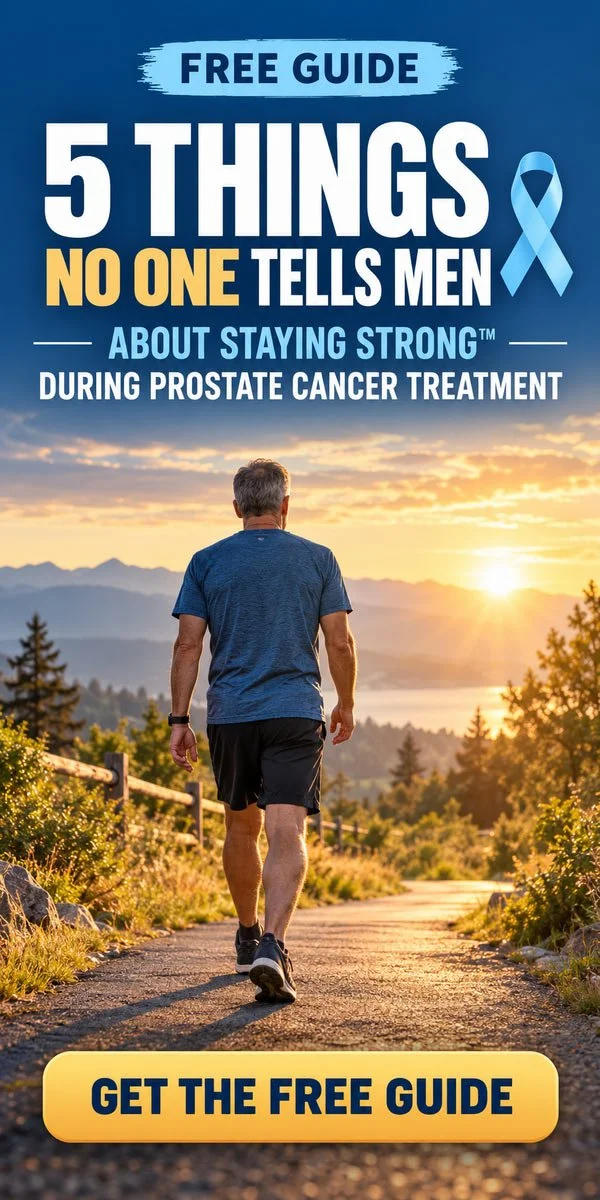
For a practical place to begin, download my free guide, The 5 Things No One Tells Men About Staying STRONG During Prostate Cancer Treatment.
Want to talk through what staying strong could look like for you? Book a STRONG™ Clarity Call with me.
Walk on,
Frank S. Ring
Author: Walking for Health and Fitness, Fitness Walking and Bodyweight Exercises, Walking Inspiration, Walking Logbook Journal , and Walking Works Blueprint
Host: Walking for Health and Fitness Podcast


