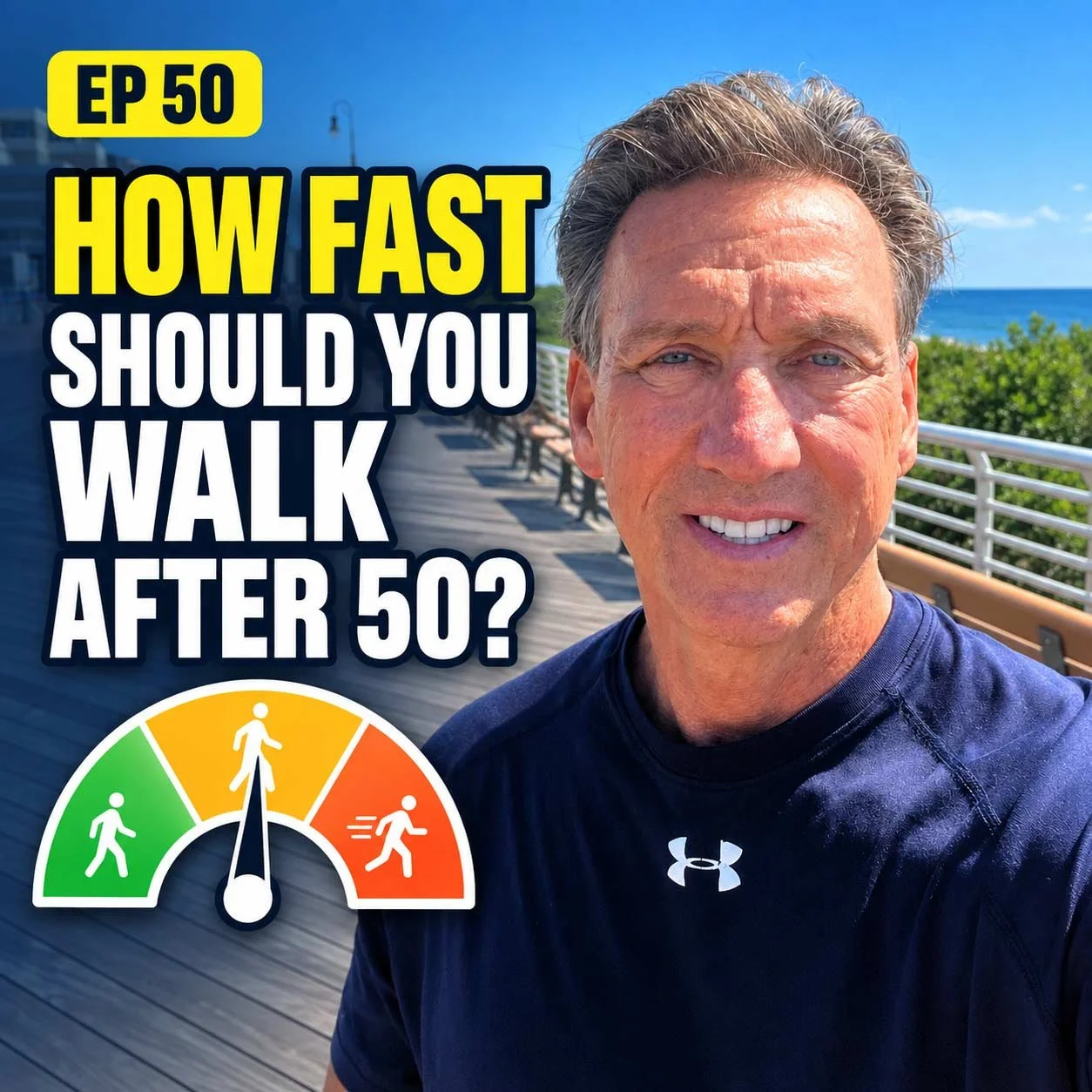
Faster is not always better—especially when you are walking after 50 or rebuilding your fitness after illness, injury, treatment, or a long period of inactivity.
Walk too easily every day and your fitness may stop improving. Turn every walk into a test, and you could finish exhausted, sore, discouraged, or unable to walk consistently.
The right pace lives between those two extremes.
So, how fast should you walk after 50?
Your best walking pace is not necessarily a specific miles-per-hour number. It is the most purposeful pace you can control today, recover from afterward, and repeat consistently.
Control it. Recover from it. Repeat it.
That is a more useful measure of walking intensity than trying to match someone else’s pace—or the pace you could maintain five or ten years ago.
Why Walking Speed Is Not the Best Starting Point
When people ask how fast they should walk, they often expect an answer such as three miles per hour, a 15-minute mile, or a specific heart-rate zone.
Those numbers can provide useful information, but they do not tell the entire story.
The same walking speed can feel completely different depending on:
Your current fitness level
Recent illness, injury, or medical treatment
Hills, wind, heat, or uneven terrain
Joint pain or balance concerns
Sleep and stress
Medications
Your energy level that day
A brisk pace for one person may feel easy. For someone returning after several months of inactivity, the same speed may feel challenging.
That is why walking intensity should be considered in relative terms: How hard is this walk for you today?
The CDC identifies brisk walking at approximately 2.5 miles per hour or faster as an example of moderate-intensity activity. However, it also explains that relative intensity depends on the individual’s fitness level. An activity that feels moderate to one person may feel vigorous to someone else. Learn more about measuring physical activity intensity from the CDC.
Your watch can give you a number. Your breathing, symptoms, effort, and recovery tell you what that number means.
The Three-Gear Walking System
Instead of chasing one “perfect” speed, think of your walking pace as three gears:
Restore
Build
Challenge
Each gear has a purpose. The goal is to select the gear that fits your body and circumstances that day.
Gear 1: Restore

Restore is your easy, recovery-oriented walking pace.
On a zero-to-ten effort scale, Restore may feel like a two or three. Your breathing remains calm, you can speak in complete sentences, and you finish feeling as though you could have done a little more.
Use Restore when you are:
Beginning or restarting a walking program
Warming up or cooling down
Recovering from a harder workout
Protecting your walking habit on a low-energy day
Rebuilding after illness, injury, treatment, or inactivity
Do not dismiss Restore because it feels easy.
This is where you can develop consistency, improve body awareness, practice good walking form, and rebuild trust in your ability to move.
A Restore walk is not a lesser walk. It is the correct walk when recovery is the priority.
Gear 2: Build
Build is a purposeful, moderate walking pace.

Your breathing and heart rate are higher than they are at rest, but you remain in control. On a zero-to-ten effort scale, this may feel like a five or six.
The talk test provides a practical way to recognize moderate intensity. According to the CDC, during moderate-intensity activity, you should generally be able to talk but not sing.
Build is the pace many adults can use to accumulate much of their weekly aerobic activity.
You do not need to race. You need to walk with enough purpose that your body recognizes the work while still leaving room for recovery.
For adults age 65 and older, the CDC recommends working toward at least 150 minutes of moderate-intensity aerobic activity each week, along with muscle-strengthening and balance activities. If you cannot meet the complete recommendation, the CDC advises being as active as your abilities and conditions allow because some activity is better than none. Review the CDC’s physical activity recommendations for older adults.
The recommendation is a direction—not a demand to do everything immediately.
Gear 3: Challenge

Challenge is a vigorous walking effort.
At this intensity, you may only be able to say a few words before pausing for a breath. On a zero-to-ten effort scale, it may feel like a seven or eight.
Challenge is optional.
It is not the price of admission to better health. If you are deconditioned, managing symptoms, recovering from treatment, or have been advised to limit exertion, this gear may not be appropriate right now.
If you are medically cleared and ready, Challenge can be introduced through brief, controlled intervals rather than turning an entire walk into a hard workout.
For example:
Walk more quickly for 30 seconds.
Return to Restore for one or two minutes.
Observe how you feel during the walk, later that day, and the following morning.
Challenge should feel deliberate—not desperate.
Free 3-Video Recovery Series
Your comeback doesn’t need more pressure. It needs a plan.
If illness, injury, treatment, or inactivity changed what walking feels like, don’t guess your way back. The free Walking for Health and Fitness Recovery Series will help you choose a manageable starting point, rebuild consistency, and move forward without doing too much too soon.
- Three practical video lessons
- Companion Recovery Guide
- A clear next step
You don’t have to be back to your old self to begin. Start where you are—and rebuild from there.
Start the Free Recovery SeriesFree access • Begin at your own pace
Use the Talk Test to Measure Your Walking Intensity
The talk test is one of the simplest ways to estimate how hard you are working without becoming overly dependent on technology.
Use these general guidelines:
Restore: You can speak comfortably in full sentences.
Build: You can talk, but singing would be difficult.
Challenge: You can only say a few words before pausing for a breath.
Heart-rate information can still be useful, but it is not appropriate to assume that one target works for everyone. Beta blockers, for example, can slow the heart-rate response during exercise. The American Heart Association recommends consulting a healthcare professional about an appropriate target when medications affect heart rate. Read the American Heart Association’s guidance on beta blockers and exercise.
Do not let a watch overrule your symptoms, medical guidance, or your ability to recover.
How to Choose the Right Walking Gear Today
Before beginning your walk, ask yourself three questions.
1. Am I medically cleared?
Follow any restrictions or instructions provided by your healthcare team. If you need medical clearance and do not have it, that is not the day to experiment with greater intensity.
2. Are my symptoms stable?
Do not try to push through new or worsening symptoms. Stop exercising and obtain appropriate medical help if you experience warning signs such as chest pain or pressure, faintness, dizziness, confusion, extreme or unusual shortness of breath, or a fast or irregular heartbeat.
Call 911 for severe or potentially life-threatening symptoms.
3. Does this pace match today’s condition?
Consider your:
Energy
Pain
Balance
Sleep
Stress
Terrain
Likely recovery
A good day may support Build. A hard day may call for Restore or a shorter walk. A stop day means pausing and addressing the reason it is unsafe or inappropriate to continue.
Consistency does not require walking at the same pace every day. Consistency means continuing to make appropriate decisions.
Ready to Start Walking Again?
If illness, injury, treatment, or inactivity knocked you out of your routine, do not turn your comeback into another fitness test.
You need a starting point—not more pressure.
My free Walking for Health and Fitness Recovery Series gives you three video lessons to help you choose a manageable starting point, build consistency on difficult days, and understand what rebuilding strength and confidence requires beyond walking alone.
You will also receive the companion Walking for Health and Fitness Recovery Guide to help you turn each lesson into a written next step.
How to Increase Your Walking Pace Without Overdoing It
Once Restore feels steady and repeatable, you may be ready to add some Build. Once Build is well tolerated, you may be ready to experiment with a small amount of Challenge.
Follow one essential rule:
Change one variable at a time.
The primary walking variables are:
Frequency: How many days you walk
Duration: How long you walk
Intensity: How hard the walk feels
If you add another walking day, do not simultaneously make every walk longer and faster.
If you increase from 10 minutes to 15 minutes, keep the pace familiar.
If you introduce faster intervals, maintain your current walking schedule and total time while you learn how your body responds.
That is the difference between gradual progression and simply piling on more work.
Four Signs You May Be Ready to Increase Your Pace
Before increasing your walking intensity, look for these four green lights:
You can complete your current walk with control.
You finish with some energy left instead of feeling depleted.
You recover predictably and are close to your usual baseline the following morning.
You do not have new or worsening symptoms that require professional guidance.
These are coaching checkpoints, not medical tests.
When all four are present, make the smallest useful change. Add one 30-second brisk interval or one minute in Build. Observe the result over several walks before increasing anything else.
If the faster pace disrupts your walking form, leaves you unusually depleted, or makes you dread your next walk, reduce the intensity.
That is information—not failure.
Try This 10-Minute Pace Awareness Walk
Use this simple walk to explore your current intensity without testing your limit.
Minutes 1–3: Restore
Walk easily. Allow your breathing and stride to settle into a comfortable rhythm.
Minutes 4–7: Build
If you have a green light, increase to a purposeful pace. Use the talk test: you should be able to speak, but singing would be difficult.
Minutes 8–10: Restore
Return to an easy pace and allow your breathing to settle.
Afterward, write down:
Which gears you used
How your breathing felt
How much energy you had left
How you felt later that day
How you felt the following morning
You are not testing your limit. You are collecting information that can help you plan your next walk.
If four minutes in Build is not appropriate, complete the entire walk in Restore—or use the shorter duration supported by your body and healthcare guidance.
The win is making the right decision.
Walking During or After Cancer Treatment
Cancer treatment can change what effort feels like.
During my own experience with androgen deprivation therapy and radiation for prostate cancer, a pace that looked easy on paper could feel very different in my body. My energy was not always predictable, and recovery mattered as much as the walk itself.
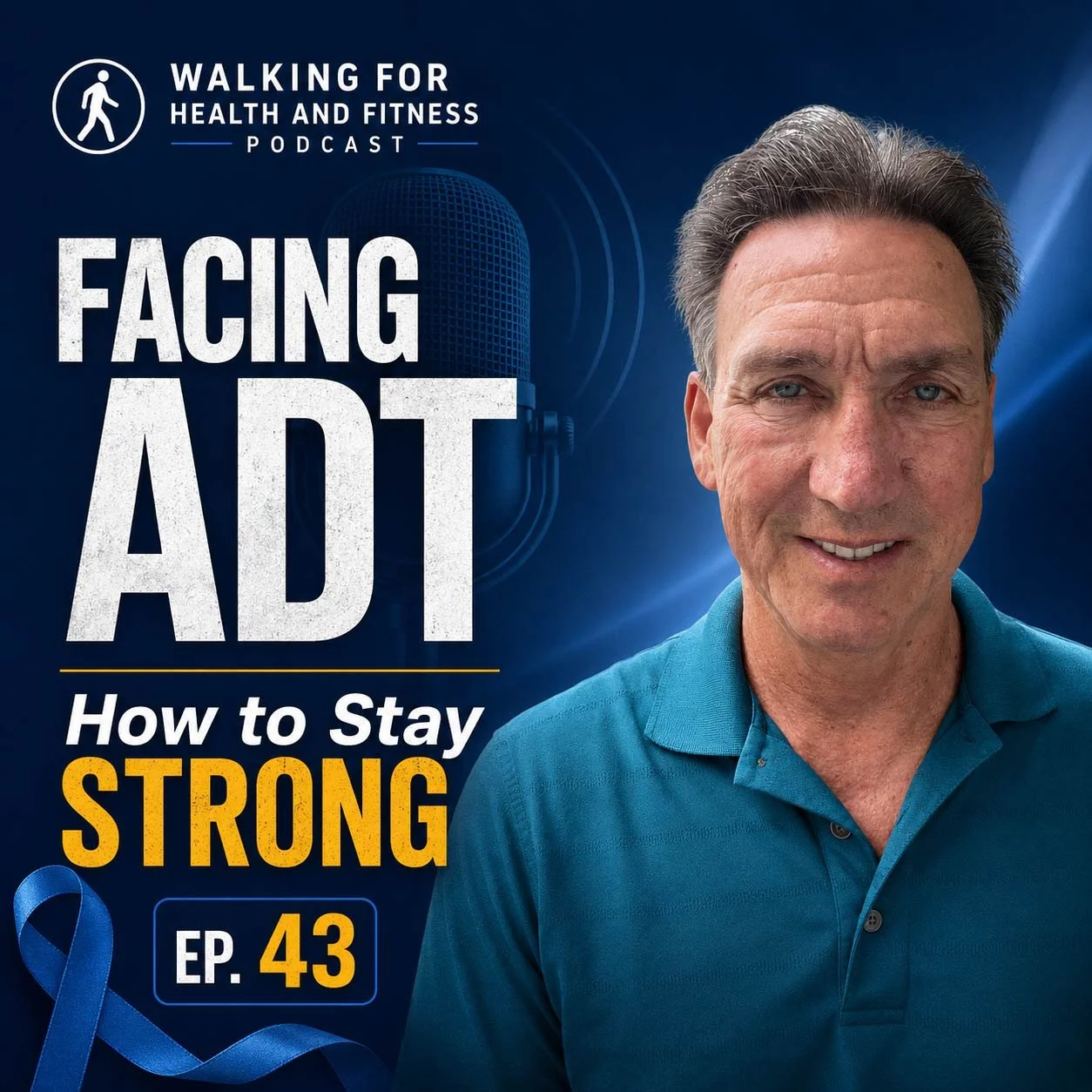
The American Cancer Society advises people undergoing treatment to ask their cancer care team about exercise and any necessary limitations. Someone who was previously inactive or whose capacity has been reduced by treatment may need to begin with short, slow walks. Time and intensity can then be increased gradually as recovery permits. Read the American Cancer Society’s physical activity guidance for people with cancer.
Do not compare today’s walking gear with your pre-treatment speed.
Use the gear that protects your function, confidence, and ability to move again tomorrow.
Sometimes the strongest walk is not the fastest one. It is the walk that keeps you connected to your body, your routine, and the person you are rebuilding.
Download my free guide: The 5 Things No One Tells Men About Staying Strong During Prostate Cancer Treatment
Frequently Asked Questions
What is a good walking speed after 50?
There is no single ideal speed for everyone over 50. The CDC lists brisk walking at approximately 2.5 miles per hour or faster as an example of moderate activity, but your best pace depends on your fitness, health, terrain, symptoms, medications, and recovery. Use speed as information rather than a pass-or-fail requirement.
Is three miles per hour a good walking pace?
Three miles per hour may be a purposeful moderate pace for some people, an easy pace for a trained walker, or a challenging pace for someone restarting after inactivity or treatment. The talk test and perceived effort can help you determine what that speed represents for you.
Should every walk be brisk?
No. Easy Restore walks can support consistency, recovery, warmups, cooldowns, and low-energy days. A sustainable walking plan can include different intensity levels rather than making every walk hard.
How do I know if I am walking too fast?
Your pace may be too demanding if you cannot control your breathing, your form begins to break down, you develop concerning symptoms, you finish unusually depleted, or you do not recover predictably before your next planned activity.
How quickly should I increase my walking pace?
Make the smallest useful change and adjust only one variable at a time. Keep your frequency and duration steady while testing a small increase in intensity. Repeat the new pace for several walks before deciding whether to add more.
Your Next Step
Ask yourself:
What pace can I control, recover from, and repeat this week?
Write down your answer and place your next walk on your calendar.
Your best pace is not the speed that proves what you used to be able to do. It is the pace that helps you build what you want your body to do next.
If you are ready to restart with a plan instead of pressure, begin with my free Walking for Health and Fitness Recovery Series.
Walk on,
Frank S. Ring
Author: Walking for Health and Fitness, Fitness Walking and Bodyweight Exercises, Walking Inspiration, Walking Logbook Journal , and Walking Works Blueprint
Host: Walking for Health and Fitness Podcast
Medical note: This article is provided for educational purposes and does not replace individualized medical advice, diagnosis, treatment, physical therapy, or emergency care. Consult an appropriate healthcare professional before beginning or changing an exercise program, particularly if you have symptoms, medical conditions, recent treatment, or exercise restrictions.


