
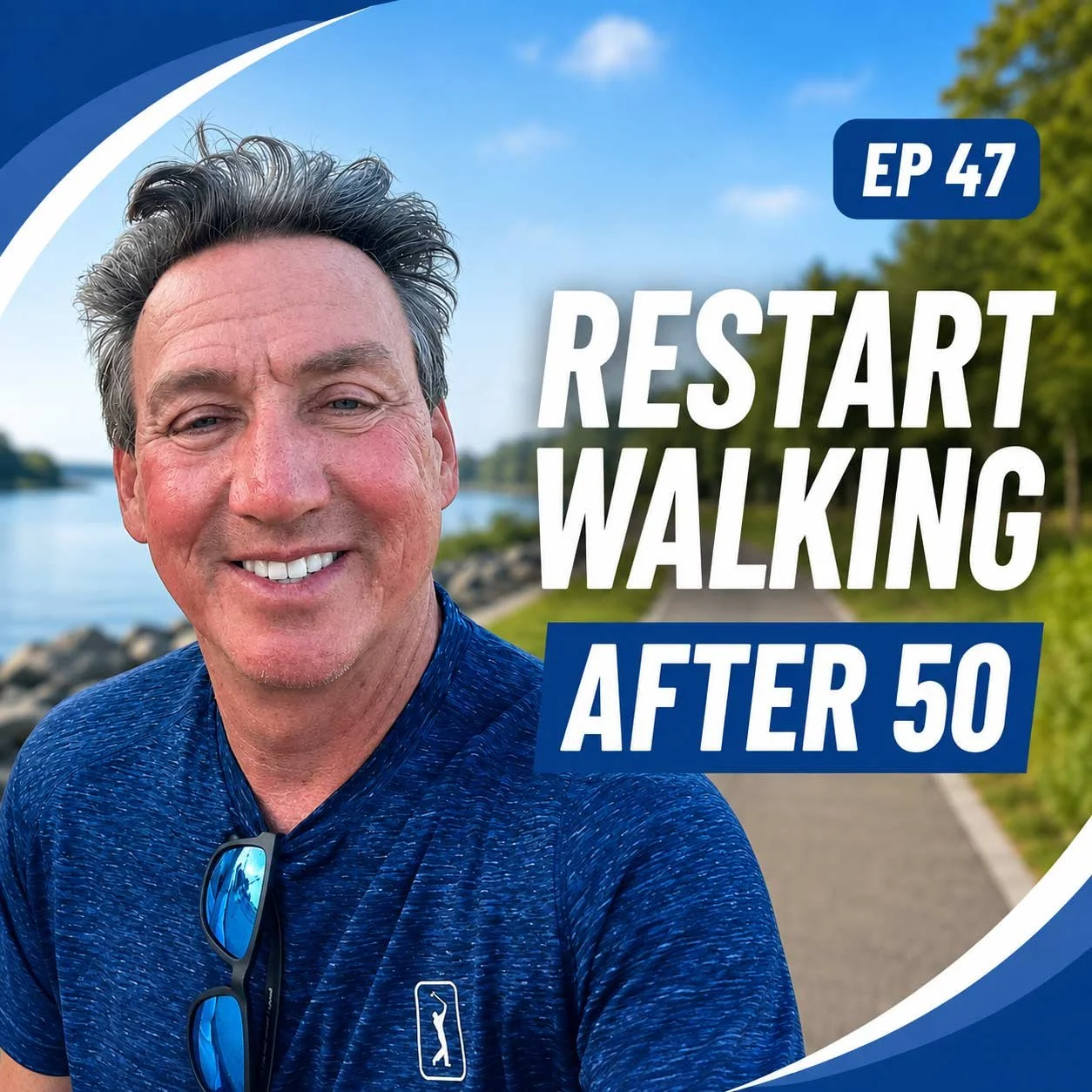
How many times have you told yourself, “I’m starting again on Monday”?
You begin walking with good intentions. For a few days—or perhaps a few weeks—you feel proud of yourself. Your energy improves, your mood lifts, and you begin to believe that this time the habit will last.
Then life happens.
The weather turns bad. Your schedule becomes crowded. You sleep poorly. Your knee feels stiff. Family or work responsibilities take over.
You miss one walk, then another. Before long, a week has passed.
That is when the real problem begins.
Instead of saying, “My routine was interrupted,” you tell yourself, “I always quit.”
That statement turns a temporary interruption into a permanent identity. It also makes restarting feel much harder than it needs to be.
The truth is that you may not have a motivation problem. You may be relying on a walking plan that only works when life is going well.
What you need is a restart system.
The Three-R Restart System
The system has three simple steps:
Reframe. Reduce. Repeat.
Together, these steps can help you return to walking without guilt, punishment, or the pressure to make up for lost time.
Step One: Reframe the Interruption
Missing several walks does not erase the progress you already made.
The strength you developed, the routes you discovered, the shoes you broke in, and the proof that you can walk consistently are still yours.
You are not starting from zero.
You are starting again with experience.
Instead of saying, “I failed again,” use this statement:
“My routine was interrupted, and today I am restarting.”
The difference may seem small, but the language matters.
“I failed” sounds final.
“My routine was interrupted” sounds fixable.
Habit-formation research also suggests that missing one opportunity does not destroy the process. Habits develop at different rates, and an occasional interruption does not mean you must begin all over again.
A missed day is a gap—not a collapse.
Consistency does not mean never getting interrupted. It means becoming someone who knows how to return.
Step Two: Reduce the First Walk
When people restart, they often try to make up for lost time.
They think, “I haven’t walked in two weeks, so I need to walk for 30 or 45 minutes today.”

That sounds committed, but it can create the next setback.
The walk feels demanding before it even begins. You postpone it until later. Later becomes tomorrow, and tomorrow becomes next Monday.
Your first walk back should not test your fitness.
It should reduce your resistance.
That is why your restart walk should be only five minutes.
Walk for two and a half minutes, turn around, and walk back. You can also use a treadmill or walk safely inside your home.
There is no pace requirement, distance goal, step target, or calorie goal.
The walk counts because you kept the appointment with yourself.
Federal physical activity guidance for older adults supports beginning slowly and doing what you can. Even short periods of activity can provide benefits and help you begin moving toward a more active lifestyle.
More importantly, the five-minute walk replaces the thought, “I need to restart,” with the evidence, “I restarted.”
That is a powerful shift.
Remember: Five minutes is the floor, not the ceiling.
When the timer reaches five minutes, you have succeeded. You may continue if you feel good, but you do not have to do more to earn the win.
Step Three: Repeat the Action
One walk can improve your mood, but a repeatable system changes your life.
Before your five-minute walk ends, answer three questions:
When will I walk next?
Where will I begin?
What is the minimum I will do?
For example: “Tomorrow at 8:00 a.m., after I finish my coffee, I will walk from my front door for at least five minutes.”
Then reduce the friction.
Put your walking shoes where you will see them. Lay out your clothes. Fill your water bottle. Charge your headphones and choose your route.
Finally, record the win.
Write down the date, the number of minutes you walked, and one word describing how you felt afterward.
You might write:
Wednesday—five minutes—hopeful.
That record becomes evidence that you followed through.
Try the Three-Walk Restart Ladder
Use this gradual progression:
Walk One: Five minutes
Walk Two: Five to ten minutes
Walk Three: Ten to fifteen minutes
Keep the pace comfortable and finish each walk feeling that you could have done a little more.
The goal is not to prove how hard you can work.
The goal is to rebuild trust with yourself.
Your Step Forward Challenge
Before today ends, take a comfortable five-minute walk.
Before you begin, say: “This is not a test. This is my return.”
When you finish, record the date, the number of minutes, and one word describing how you feel.
Then schedule your next walk.
Do not wait until Monday. Your next chapter can begin with five minutes today.
Download the Free 5-Minute Kickstart
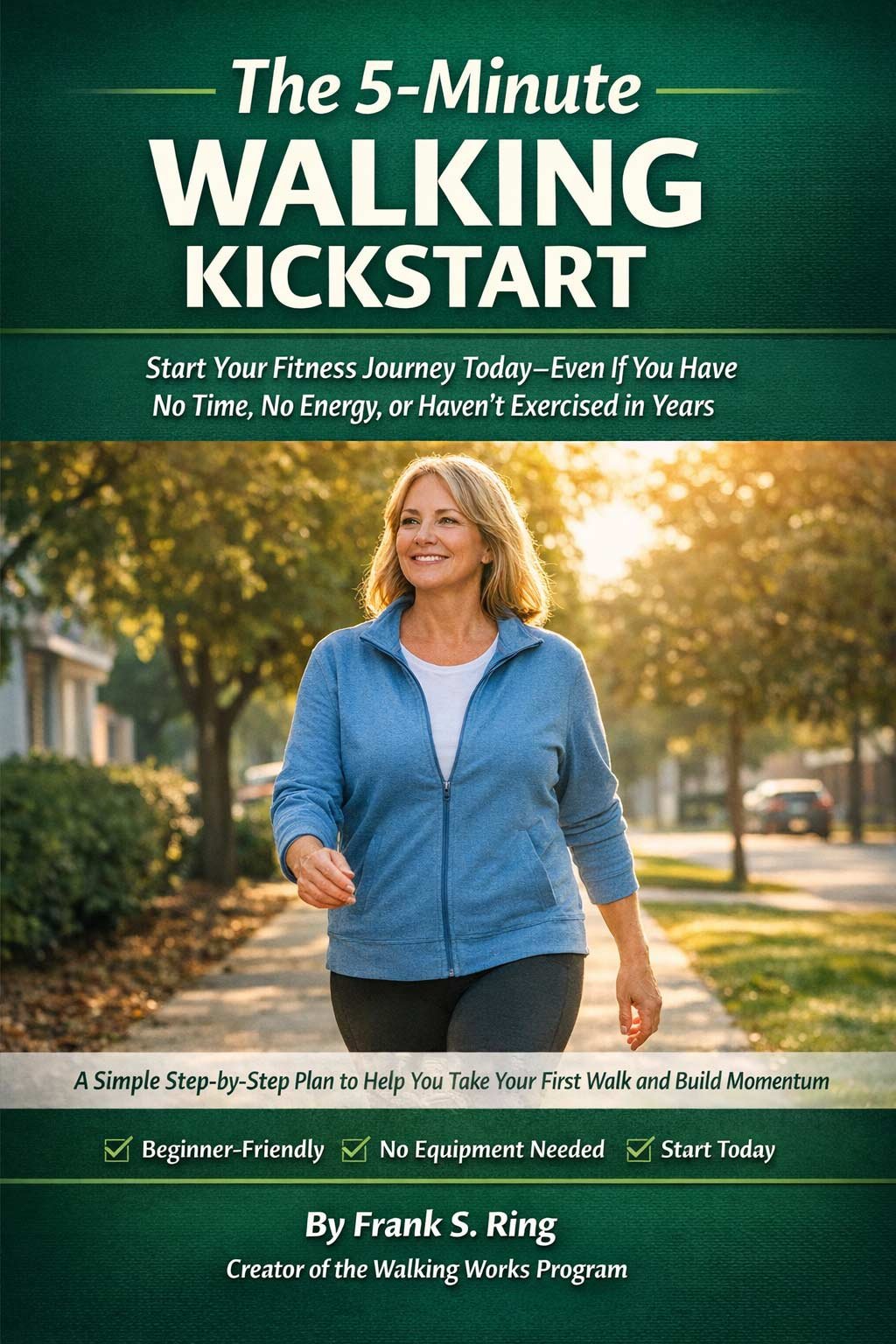
The free 5-Minute Kickstart gives you the exact Day One walk, a simple place to record your progress, a one-word reflection, space to celebrate your daily win, and a gratitude prompt.
It is also your introduction to Walking Works, the 14-Day Quick-Start Walking Program designed to help you build consistency, confidence, and a lasting walking habit.
Download The 5-Minute Kickstart<<<<
STRONG Recovery Resource
For men going through prostate cancer treatment or rebuilding after ADT and radiation, the STRONG message of this episode is simple: do not confuse adjusting with quitting.
Your energy and physical capacity may change from day to day, so a shorter route, slower pace, indoor walk, or extra recovery day is not failure—it is an intelligent response to what your body is experiencing.
Apply the same Three-R System: Reframe the change as adapting your recovery plan, Reduce the walk to a safe and manageable level, and Repeat by choosing the next appropriate opportunity to move.
A recovery walk is not about proving toughness. It is about preserving mobility, confidence, routine, and your belief that you are still actively participating in your recovery.
Treatment fights the cancer; an intentional recovery system helps rebuild the man who went through it
For men navigating prostate cancer, ADT, radiation, or post-treatment recovery, download: 5 Things No One Tells Men About Staying Strong During Prostate Cancer Treatment
Lastly, give a listen to Episode 45: You’re Not Out of Shape—You’re Just Missing a Walking System
Walk on. Stay steady. Stay STRONG,
Frank S. Ring
Author: Walking for Health and Fitness, Fitness Walking and Bodyweight Exercises, Walking Inspiration, Walking Logbook Journal , and Walking Works Blueprint


