Recently I had the opportunity to appear on the Pulse Beat Podcast, sponsored by Cardio Miracle.
The conversation covered something deeply personal to me—how walking, mindset, and daily habits helped me navigate my prostate cancer diagnosis and recovery, and how that experience led to the creation of my STRONG Through Prostate Cancer™ Method.
I’d like to share some of the key ideas from that conversation here. Because if there is one message I hope people take away, it’s this:
Your health changes the moment you decide to take ownership of it.
And sometimes, the first step is literally a step.
Can Walking Help During Prostate Cancer Recovery?
Walking can be one of the safest and most effective forms of exercise during prostate cancer recovery. Regular walking supports circulation, helps reduce treatment-related fatigue, improves mood, and promotes overall health. Because walking is low-impact and adaptable, it allows men to rebuild strength gradually while maintaining daily movement during and after treatment.
Why Walking Is One of the Most Powerful Health Habits
Many people overlook walking because it seems too simple.
But walking is one of the most powerful tools we have for improving both physical and mental health.

You don’t need special equipment.
You don’t need a gym membership.
You don’t need to train like an athlete.
You simply need to move your body consistently.
Even short walks can have profound benefits:
improved cardiovascular health
better blood sugar regulation
reduced stress and anxiety
improved mood and mental clarity
weight management
A simple habit like walking after meals or taking a short daily walk around the block can compound over time.
Small steps add up.
And over months and years, they can transform your health.
Why Walking During Cancer Recovery Matters
When people think about exercise during cancer treatment, they often assume it must involve intense workouts or structured training programs.
In reality, walking is one of the most effective and sustainable forms of exercise during cancer recovery.
Walking supports the body in several important ways:
• It helps maintain cardiovascular health
• It supports circulation and oxygen delivery throughout the body
• It can help reduce fatigue associated with cancer treatment
• It improves mood and reduces anxiety
• It encourages gentle muscle activity without excessive strain
Because walking is low-impact and adaptable, it can be adjusted to match your energy level on any given day.
Some days that may mean a longer walk.
Other days it may simply mean walking to the end of the driveway and back.
Both matter.
The key is consistency.
Research from the National Cancer Institute suggests that regular physical activity during and after cancer treatment can help improve quality of life, reduce fatigue, and support long-term health outcomes.
For many men, walking becomes more than just exercise during recovery.
It becomes a daily practice that restores clarity, reduces stress, and rebuilds confidence step by step.
My Prostate Cancer Diagnosis
In March of 2025, my life changed.
I was diagnosed with prostate cancer.
My treatment plan included:
Androgen Deprivation Therapy (ADT), which reduces testosterone levels to slow cancer growth
28 radiation treatments
The medical treatment itself was successful.
My latest blood work shows my PSA level is now below 0.1, which is excellent news.
But what many people don’t talk about is what happens during treatment.
The physical and emotional effects were far more challenging than I expected.
ADT can cause:
fatigue
muscle loss
weight gain
increased appetite
reduced energy
mental fog
Within weeks of starting treatment, I experienced something I describe as the “fog of war.”
I knew the habits that were good for me.
But I struggled to execute them.
Walking up my driveway sometimes felt like a full workout.
My body felt completely different.
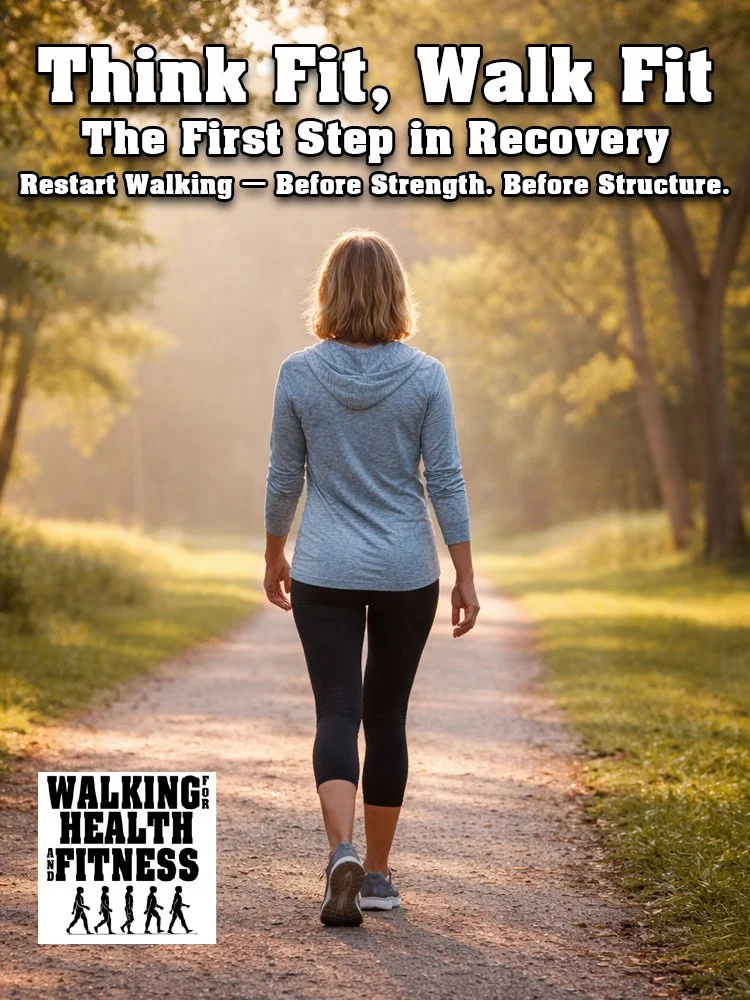
The Missing Piece in Cancer Recovery
My medical team was excellent at treating the disease.
But there was something missing.
The guidance I received for recovery consisted of:
a sheet of diet suggestions
basic exercise recommendations
That was it.
What I didn’t receive was support for:
rebuilding strength
managing the mental battle
restoring energy
regaining confidence
navigating the identity shift that comes with a cancer diagnosis
And that realization changed everything.
Because I thought:
What if other men are going through this alone too?
The Birth of the STRONG Method
During my recovery, I began writing notes.
I asked myself a simple question:
If I had to go through this again, what would I do differently?
Those notes eventually became the foundation of my recovery framework:
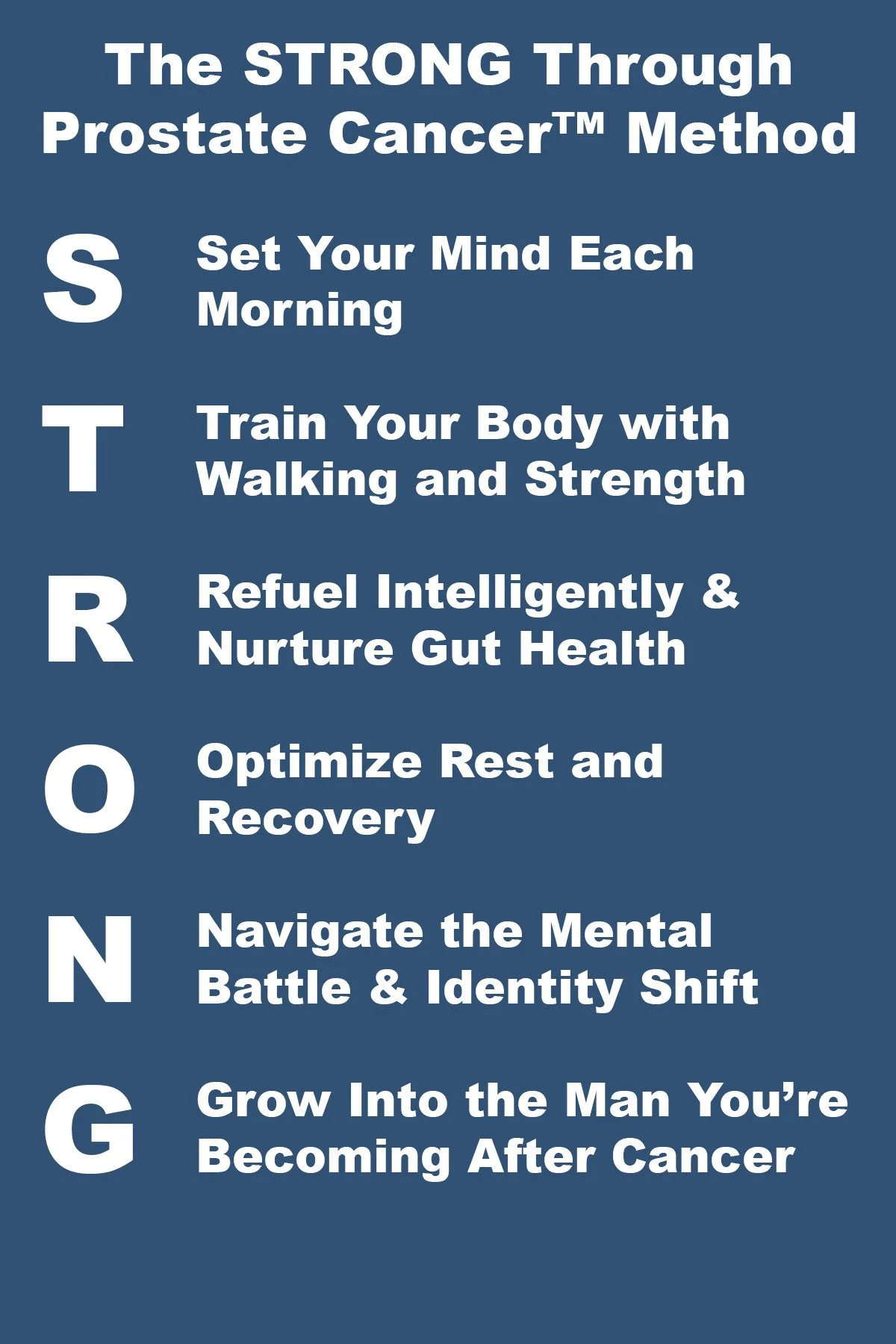
The STRONG Through Prostate Cancer™ Method
STRONG is an acronym for the key pillars of recovery.
S — Set Your Mind Each Morning
Recovery begins with mindset.
Daily practices like:
gratitude journaling
reflection
spiritual reading
positive intention setting
can stabilize your emotional state before the day begins.
T — Train Your Body
Movement is essential.
For many men, that begins with walking.
Simple strength training and bodyweight exercises can help rebuild muscle lost during treatment.
You don’t need extreme workouts.
Consistency is far more powerful than intensity.
R — Refuel Intelligently
Nutrition becomes critical during recovery.
This includes:
clean, whole foods
proper hydration
gut health support
reducing inflammatory foods
Research increasingly shows that gut health plays a major role in overall wellness.
O — Optimize Rest and Recovery
Many men believe they must push through everything.
But during recovery, rest becomes a strategic tool.
Quality sleep, proper rest, and allowing the body to heal are essential.
N — Navigate the Mental Battle
Cancer is not only a physical battle.
It is a mental and emotional one.
Support, conversation, and coaching can make a tremendous difference during this stage.
G — Grow Into the Man You’re Becoming
Life after cancer changes you.
You are not the same person as before.
But that change can be powerful.
The goal is not simply to survive.
It’s to grow into a stronger version of yourself.

Why Early Detection Matters
One of the most important lessons I share with men is this:
Track your PSA levels.
A PSA blood test is one of the earliest indicators of potential prostate issues.
In my case, my PSA levels gradually increased over several years before my diagnosis.
Monitoring these changes helped my doctor detect the problem earlier.
Early detection dramatically improves treatment outcomes.
If you are a man over 40—especially with a family history—this test is extremely important.
Learn more about prostate cancer screening from the National Cancer Institute.
The Power of Consistency

One of the stories I shared on the podcast was my 11,000-mile virtual walk around the United States.
It started as a fun project for my students in a Photoshop class.
I mapped my walking miles across the country and created images showing myself in different locations along the route.
What began as a classroom experiment became a 16-year journey.
More than 11,000 miles later, it reinforced something I already believed:
Consistency beats intensity every time.
Three miles today.
Four miles tomorrow.
Another walk the next day.
That’s how transformation happens.
The Hardest Part of Exercise
The hardest part of any workout is simple: Getting out the door.
Once you start moving, momentum builds.
That’s why I tell people:
Don’t commit to a 60-minute workout.
Commit to two minutes.
Step outside.
Start walking.
Most of the time, those two minutes turn into twenty.
A Final Message
If I could leave you with one message, it would be this:
Take control of your health.
No one else can do it for you.
Start small.
Start simple.
Start with a walk.
Because the first step toward better health, clarity, and confidence may be the most powerful step you ever take.
Free Guide for Men Facing Prostate Cancer
If you or someone you love has recently been diagnosed with prostate cancer, the first few weeks can feel overwhelming.
Doctors focus on treating the disease—but many men are left wondering how to manage the physical, emotional, and lifestyle changes that follow.
That’s why I created a free guide called:
The 5 Things No One Tells Men About Staying Strong During Prostate Cancer Treatment
How to Walk Through Treatment — Not Just Get Through It
Inside this short guide you’ll discover:
The first mindset shift that helps men regain control after diagnosis
Why walking can become a powerful recovery tool
The simple daily habits that support strength and resilience during treatment
How to navigate the mental battle that many men face privately
What to focus on so you can move forward with confidence
This guide is based on my own experience navigating prostate cancer treatment and recovery.
Download your free copy here: The 5 Things No One Tells Men About Staying Strong During Prostate Cancer Treatment
Because when men understand what to focus on first, the path forward becomes much clearer.
Walk on. Stay steady. Stay STRONG.
Frank


